Why Is Ventilation Important in Modern Homes? Indoor Air Quality Explained
Modern homes are more airtight than ever before, reducing natural air exchange and increasing the need for proper ventilation. This guide explains how ventilation improves indoor air quality, removes pollutants and humidity, supplies fresh air, and helps create a healthier and more comfortable indoor environment. It also compares natural and mechanical ventilation, explains how ventilation filters work, and explores the role of heat recovery systems in modern homes.
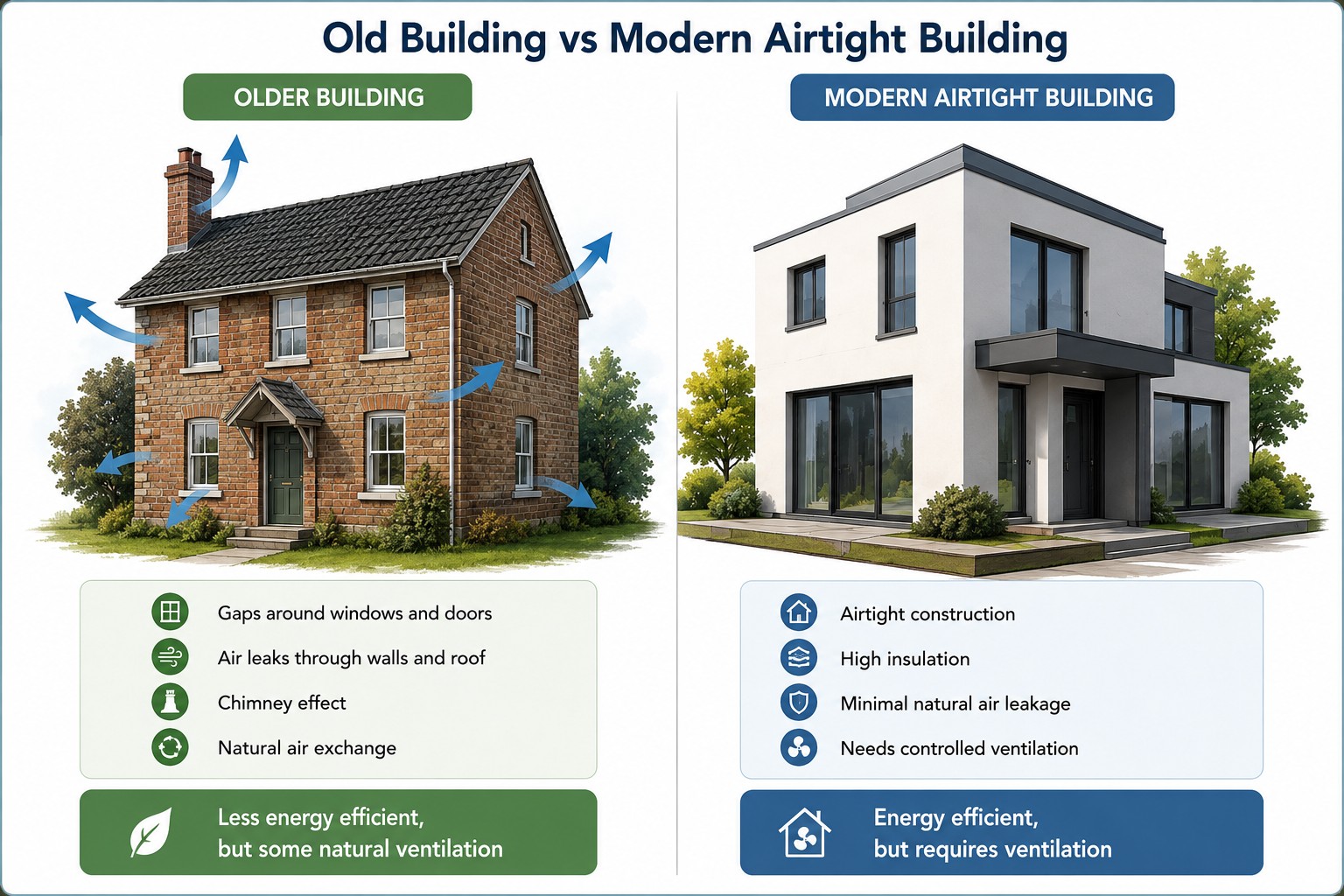
Modern homes are designed to be energy efficient, but better insulation and airtight construction also reduce natural air exchange. Without proper ventilation, stale air, moisture, odours and indoor pollutants can gradually accumulate indoors.
Old Building vs Modern Airtight Building
How Older Homes Were Ventilated Naturally
Older homes often relied on natural ventilation. Fresh air entered through small gaps around windows and doors, through chimneys and through leaks in the building envelope.
This was not very energy efficient, but it provided a basic level of air exchange. Modern homes are different. They are built to be much more airtight, which means fresh air no longer enters the building in the same uncontrolled way.
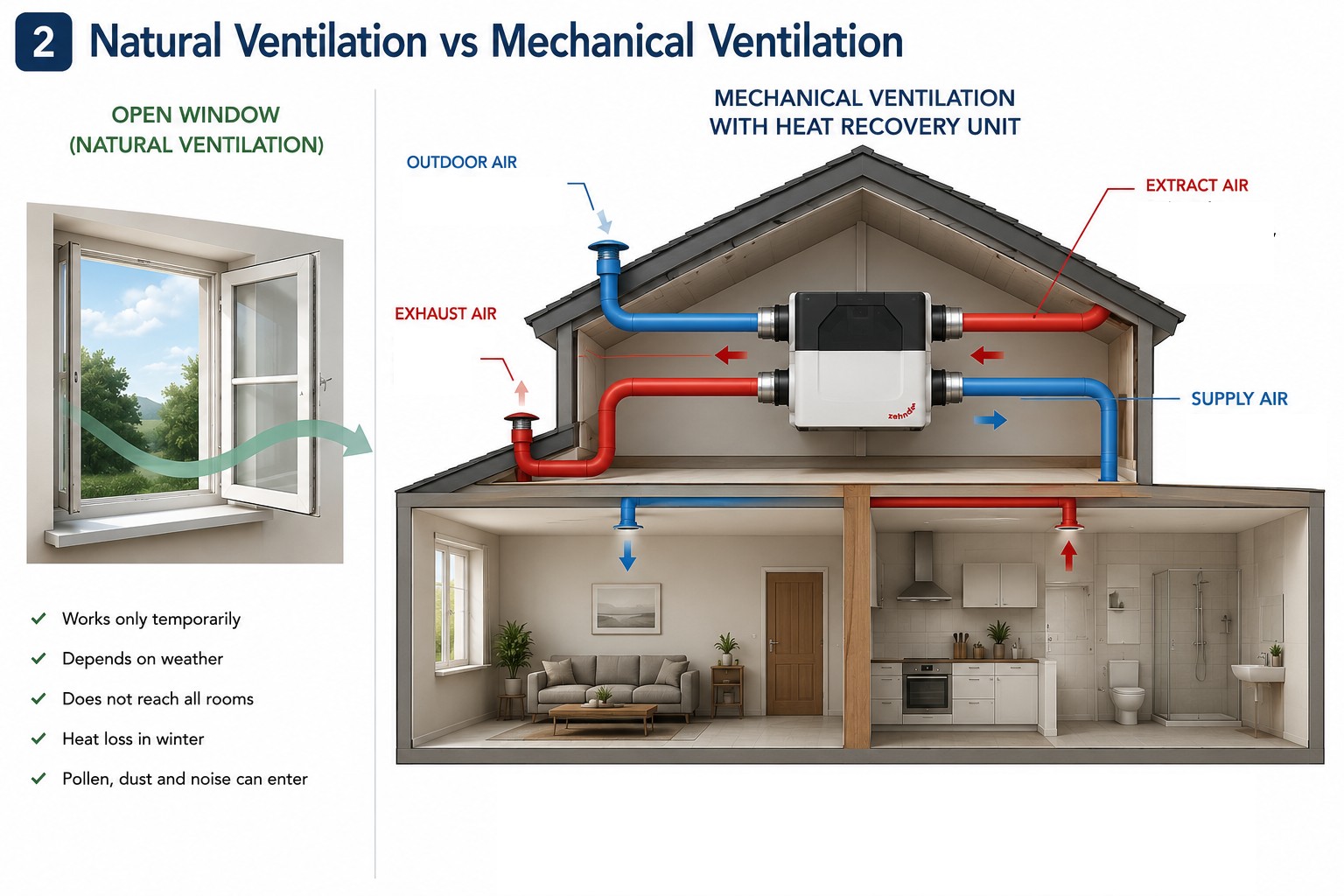
Natural Ventilation vs Mechanical Ventilation
Opening windows can provide temporary ventilation, but it depends on weather, wind, outdoor temperature and user behaviour. In winter, it causes heat loss. During allergy season, pollen and dust can enter. In urban areas, outdoor pollutants and noise may also come inside.
Mechanical ventilation provides a more controlled solution. It continuously supplies fresh air to living spaces and extracts stale air from kitchens, bathrooms and utility rooms.
Natural Ventilation vs Mechanical Ventilation
Why Fresh Air Matters
Most people know the feeling of entering a bedroom in the morning and noticing that the air feels heavy or stuffy. This is usually caused by poor air exchange, higher carbon dioxide levels and humidity accumulated during the night.
A commonly used residential ventilation reference is around 10 l/s, or approximately 36 m³/h, of fresh air per person. The exact requirement depends on the building and local regulations, but the principle is simple: people need a continuous supply of fresh air indoors.
What Pollutes Indoor Air?
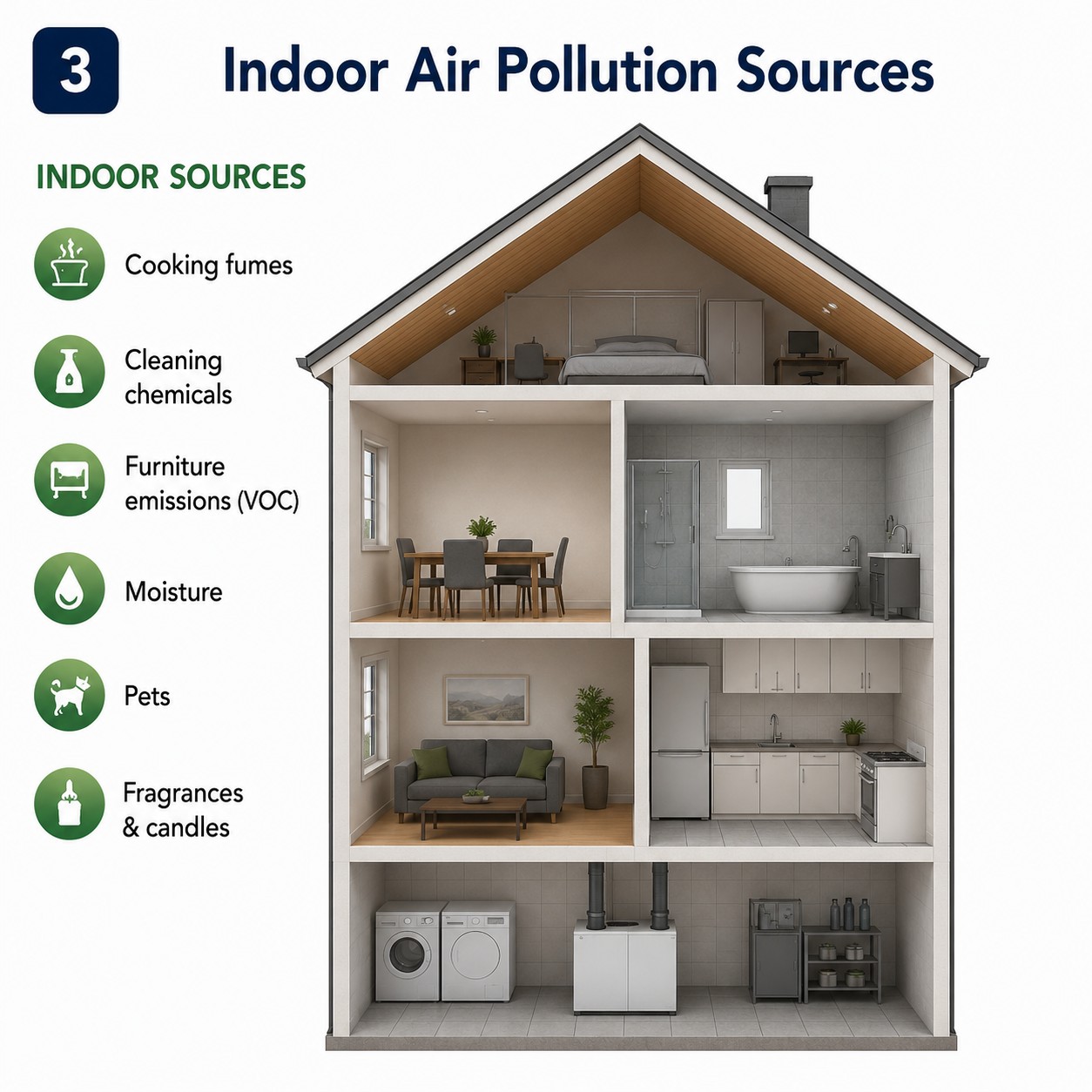
Many people think outdoor air is the main source of pollution. In reality, a large part of the pollutants we breathe can be generated inside our own homes.
Cooking, cleaning products, furniture, candles, fragrances, moisture and pets all contribute to indoor air pollution. Without proper ventilation, these pollutants remain inside and gradually build up.
Indoor Air Pollution Sources
How Mechanical Ventilation Works
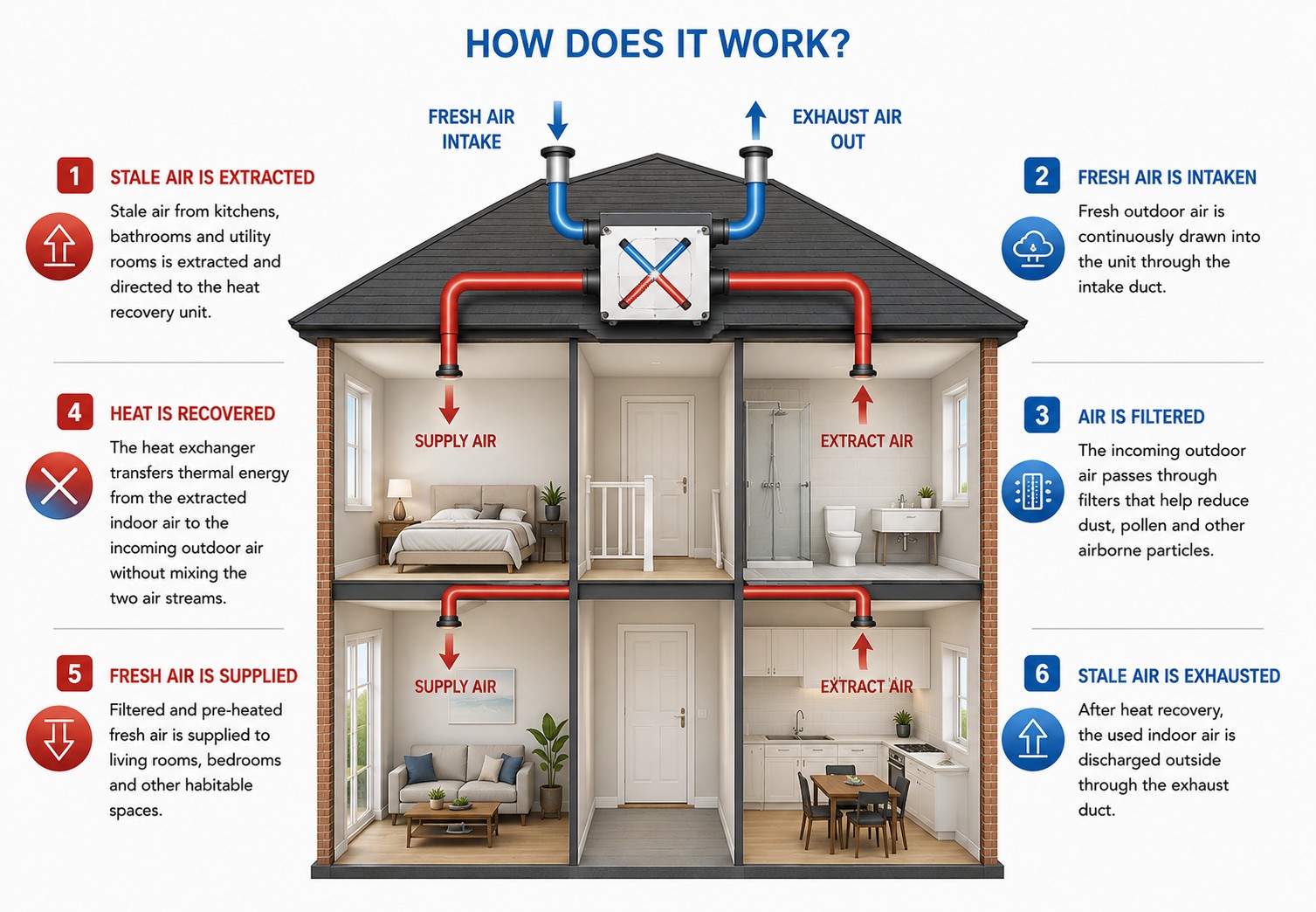
A heat recovery ventilation system supplies filtered fresh air to living rooms, bedrooms and other habitable spaces. At the same time, it extracts stale air from kitchens, bathrooms, WC rooms and utility areas.
Inside the heat recovery unit, thermal energy from the extracted indoor air is transferred to the incoming outdoor air without mixing the two air streams. This helps maintain indoor comfort while reducing ventilation heat losses.
How Mechanical Ventilation Works
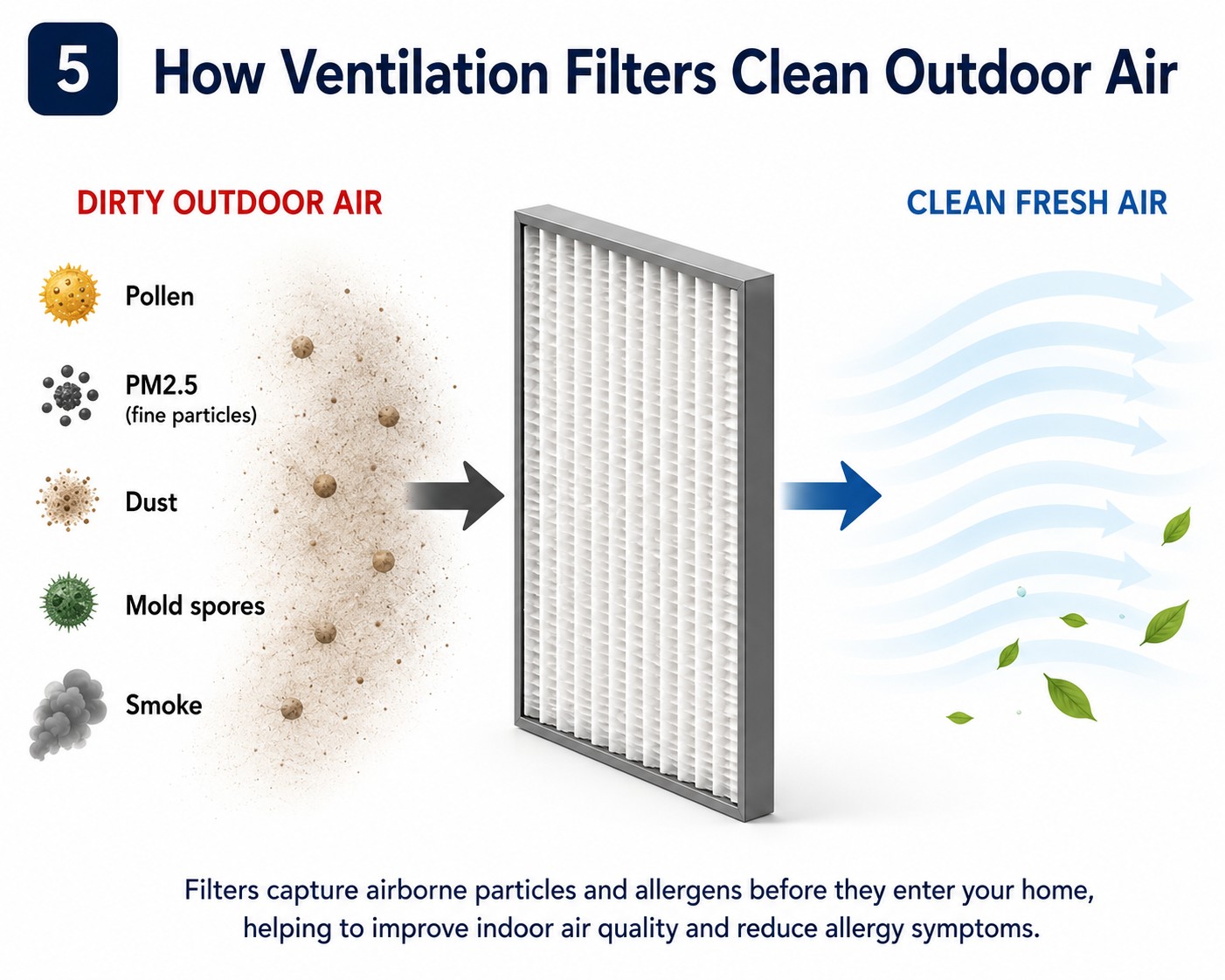
How Ventilation Filters Improve Indoor Air Quality
Ventilation moves air. Filters improve the quality of that air.
As outdoor air enters the ventilation system, it passes through filters before being supplied to the living space. Depending on the filter class, ventilation filters can reduce pollen, dust, mould spores, fine particles, smoke and other airborne contaminants.
How Ventilation Filters Clean Outdoor Air
My Personal Experience
Having worked in the ventilation and filtration industry for several years, I have also experienced the practical benefits of mechanical ventilation in everyday life.
Before renovating my own home, strong winds had a clear effect on indoor comfort. During windy winter days, it was easy to feel cold air entering through small gaps around windows, doors and other parts of the building envelope. Even when the heating system was working, there was a noticeable feeling of temperature loss and drafts.
After improving the building envelope and using proper ventilation, indoor temperatures became more stable. The home did not simply feel warmer — it felt more consistent, with fewer drafts and a better supply of fresh air.
Reduced seasonal pollen allergy symptoms
Less dust accumulation on furniture and surfaces
Fresher indoor air throughout the day
No more strong “stuffy air” feeling in bedrooms after sleeping
Fewer mosquitoes entering the home during summer
Reduced outdoor odours when using activated carbon filters
Faster removal of cooking smells and household odours
Does Mechanical Ventilation Save Energy?
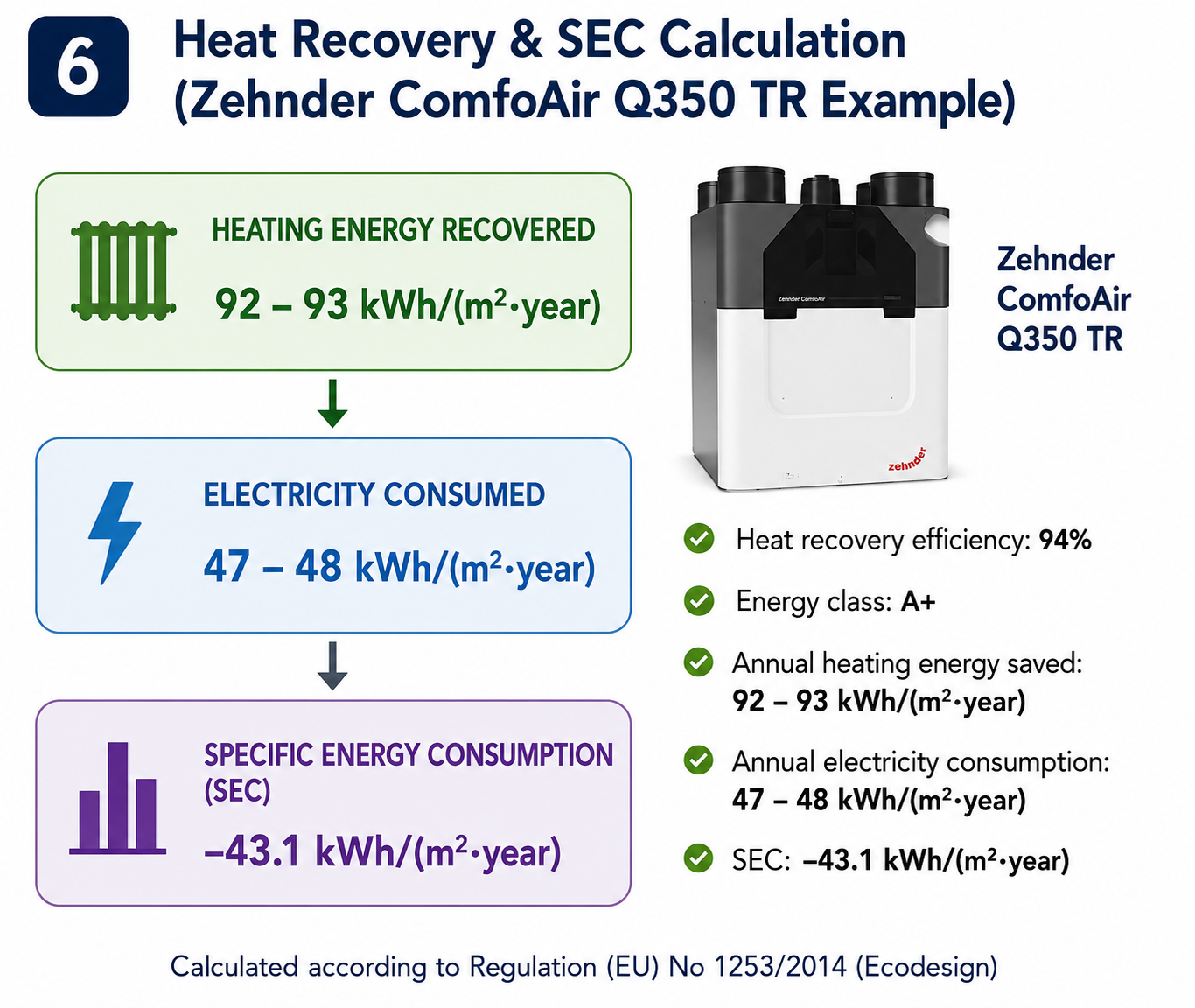
Energy savings from ventilation should not be judged only by heat recovery efficiency. A ventilation unit also consumes electricity, so the real energy performance depends on both recovered heat and electrical consumption.
In the European Union, residential ventilation units are evaluated under Ecodesign rules using the Specific Energy Consumption method. This considers heating energy saved, electricity consumed and the resulting SEC value.
Heat Recovery and SEC Calculation Example
For example, the Zehnder ComfoAir Q350 TR product data shows a heat recovery efficiency of 94%, an A+ energy class, annual heating energy saved of approximately 92–93 kWh/(m²·year), annual electricity consumption of approximately 47–48 kWh/(m²·year), and an SEC value of -43.1 kWh/(m²·year).
In practice, most homeowners choose mechanical ventilation primarily for comfort, indoor air quality and convenience. Energy savings are important, but they are only one part of the full picture.
Conclusion
Modern homes are becoming increasingly airtight, which makes proper ventilation more important than ever. Mechanical ventilation helps remove stale air, manage humidity, reduce indoor pollutants and supply fresh filtered air throughout the home.
For many homeowners, the biggest benefits are simple and practical: fresher air, fewer odours, less dust, fewer allergy problems and a cleaner, more comfortable indoor environment.
Frequently Asked Questions
Why is ventilation important?
Ventilation removes stale indoor air and supplies fresh outdoor air, helping maintain indoor air quality and comfort.
Is opening windows enough for ventilation?
Opening windows can provide temporary ventilation, but it does not ensure continuous air exchange throughout the home and often causes heat loss.
How much fresh air does a person need?
A commonly used residential reference is around 10 l/s, or approximately 36 m³/h, of fresh air per person.
Can ventilation reduce carbon dioxide levels?
Yes. Continuous ventilation helps dilute and remove carbon dioxide generated by people inside the building.
Does mechanical ventilation help with allergies?
It can. High-quality ventilation filters can reduce the amount of pollen and other airborne allergens entering the home.
Does ventilation remove dust?
Ventilation filters can reduce dust entering from outside, while continuous air exchange helps remove suspended indoor particles.
Can ventilation help prevent mould?
Proper ventilation helps control indoor humidity, reducing conditions that encourage mould growth.
How do ventilation filters work?
Filters capture airborne particles as outdoor air passes through the ventilation system before entering living spaces.
Does mechanical ventilation save energy?
Heat recovery ventilation can reduce ventilation-related heat losses, but actual savings depend on the building, climate, airflow settings and electricity consumption.
How often should ventilation filters be replaced?
Most residential ventilation filters should be checked every 3–6 months and replaced according to manufacturer recommendations and local air quality conditions.
Manage Consent
To provide the best experiences, we use technologies like cookies to store and/or access device information. Consenting to these technologies will allow us to process data such as browsing behavior or unique IDs on this site. Not consenting or withdrawing consent, may adversely affect certain features and functions.
Functional
Always active
The technical storage or access is strictly necessary for the legitimate purpose of enabling the use of a specific service explicitly requested by the subscriber or user, or for the sole purpose of carrying out the transmission of a communication over an electronic communications network.
Preferences
The technical storage or access is necessary for the legitimate purpose of storing preferences that are not requested by the subscriber or user.
Statistics
The technical storage or access that is used exclusively for statistical purposes.The technical storage or access that is used exclusively for anonymous statistical purposes. Without a subpoena, voluntary compliance on the part of your Internet Service Provider, or additional records from a third party, information stored or retrieved for this purpose alone cannot usually be used to identify you.
Marketing
The technical storage or access is required to create user profiles to send advertising, or to track the user on a website or across several websites for similar marketing purposes.