Ventilation Air Filters: Why Air Filtration Matters for Indoor Air Quality
A ventilation system brings outdoor air into your home, but outdoor air is not always clean. Depending on where you live, the air entering your ventilation unit may contain pollen, mould spores, traffic pollution, smoke, fine dust and gaseous pollutants.
This is why ventilation air filters are not just accessories. They protect the ventilation unit, but more importantly, they help improve the quality of the air supplied into your living spaces.

Why Ventilation Filters Are Important
Every mechanical ventilation or heat recovery ventilation system needs filters. At the most basic level, filters protect the internal components of the unit from dust and dirt.
They help keep fans, heat exchangers, heating coils and air ducts cleaner for longer. In many systems, a basic coarse filter can be enough for equipment protection.
However, protecting the ventilation unit and protecting people are not the same thing. A basic filter may protect the equipment, but it may not be sufficient to reduce fine particles from traffic, smoke or combustion.
Common Outdoor Pollutants Found in Ventilation Air
| Pollutant | Typical size | Main source | Recommended filtration |
|---|
| Pollen | Approx. 10–100 µm | Trees, grass, plants | ISO ePM10 / EN 779 M5 |
| Mould spores | Approx. 2–30 µm | Organic matter, vegetation, damp areas | ISO ePM10 / EN 779 M5 |
| Traffic pollution | Mostly PM2.5 and PM1 | Vehicle exhaust, brake and tyre wear | ISO ePM1 / EN 779 F7 |
| Wood smoke and smog | Mostly fine and ultrafine particles | Fireplaces, stoves, solid fuel heating | ISO ePM1 / EN 779 F7–F9 |
| VOCs and odours | Gaseous pollutants | Traffic, smoke, paints, furniture, cleaning products | Activated carbon / combi filter |
PM10, PM2.5 and PM1: Why Particle Size Matters
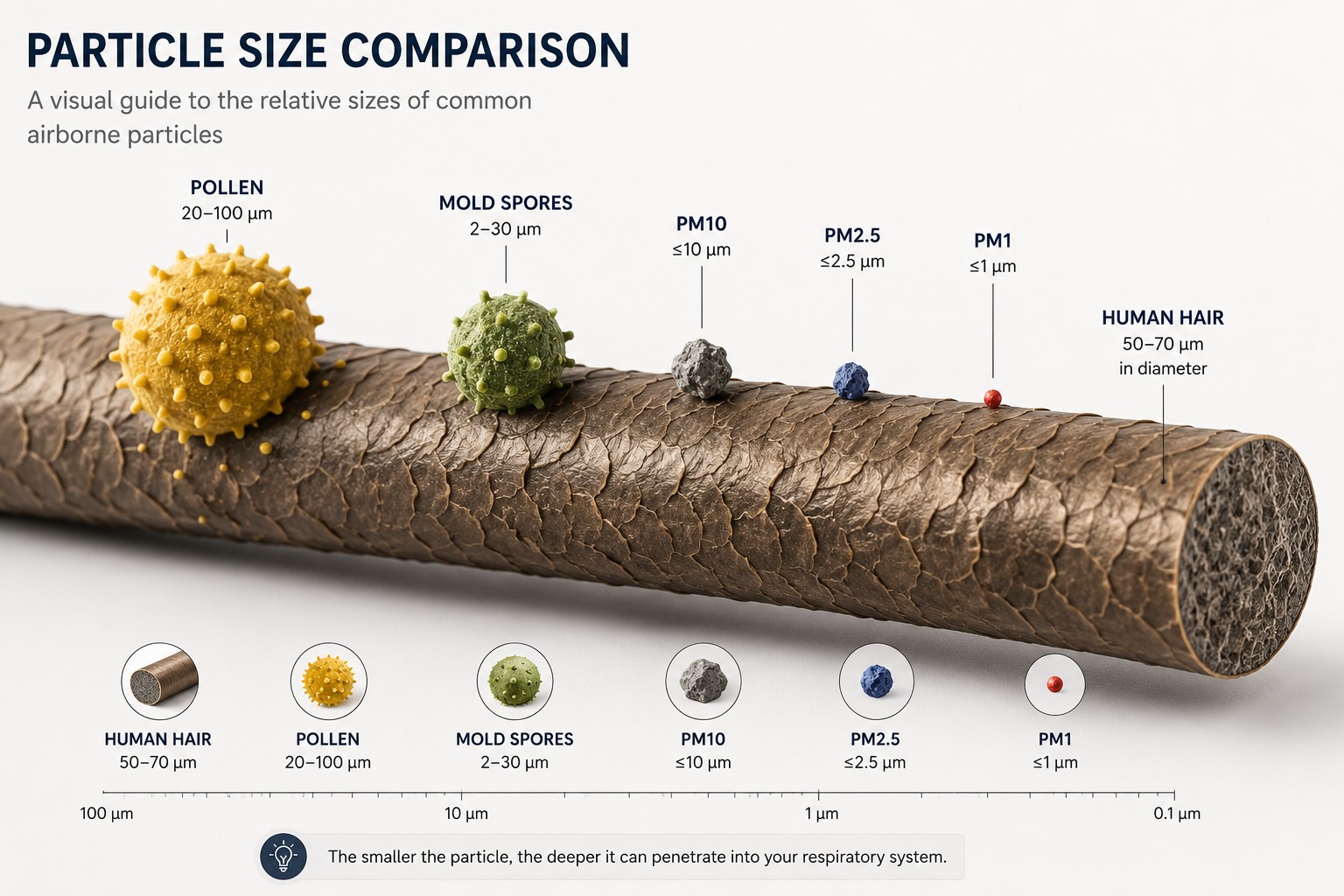
Not all airborne particles behave in the same way. Larger particles, such as pollen or coarse dust, are easier to capture. Smaller particles can travel deeper into the respiratory system.
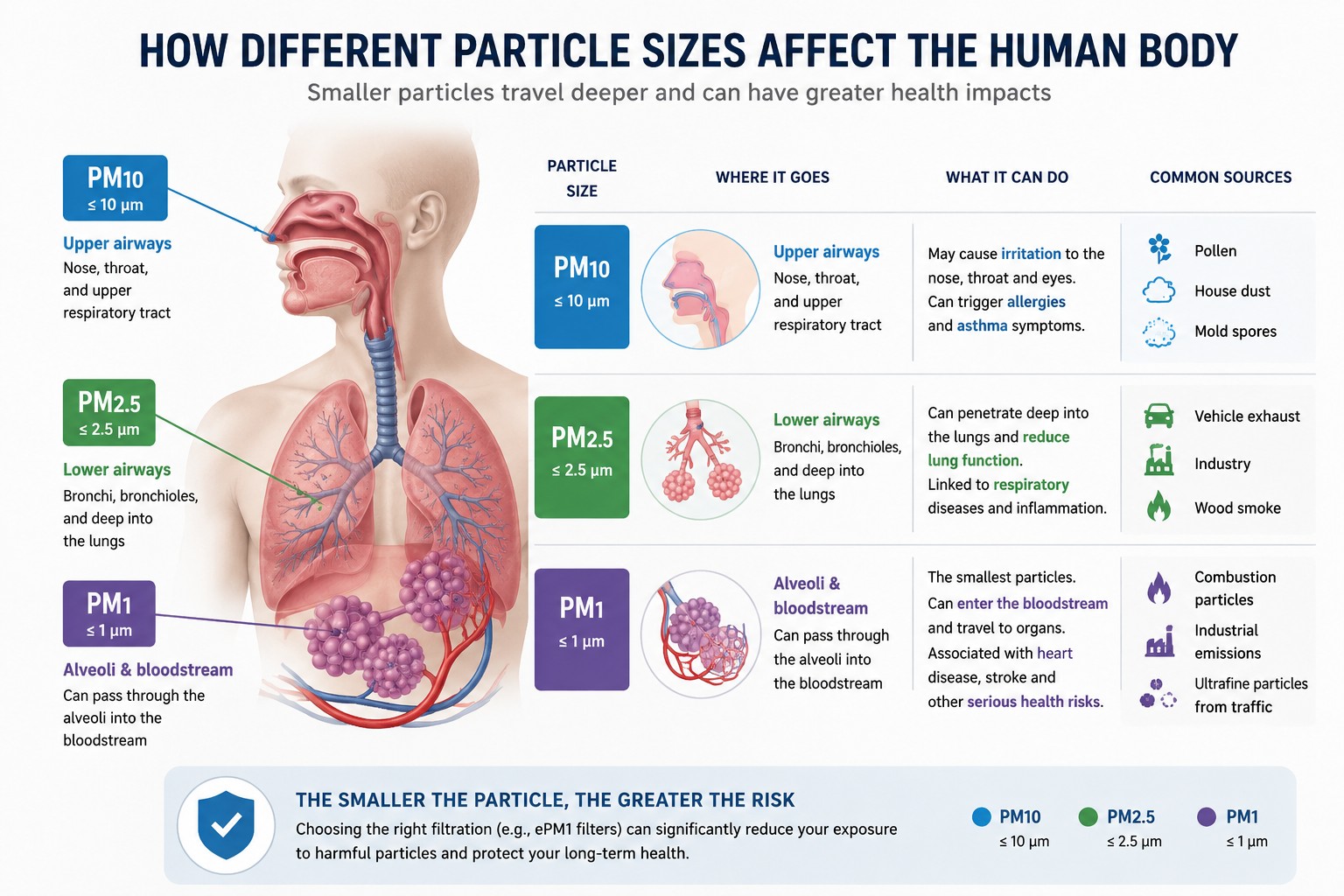
PM10 particles can affect the nose, throat and upper airways. PM2.5 particles can penetrate deeper into the lungs. PM1 particles are the smallest of these three groups and are considered especially important because they can reach the deepest parts of the lungs and may enter the bloodstream.
Your Environment Determines the Right Filter
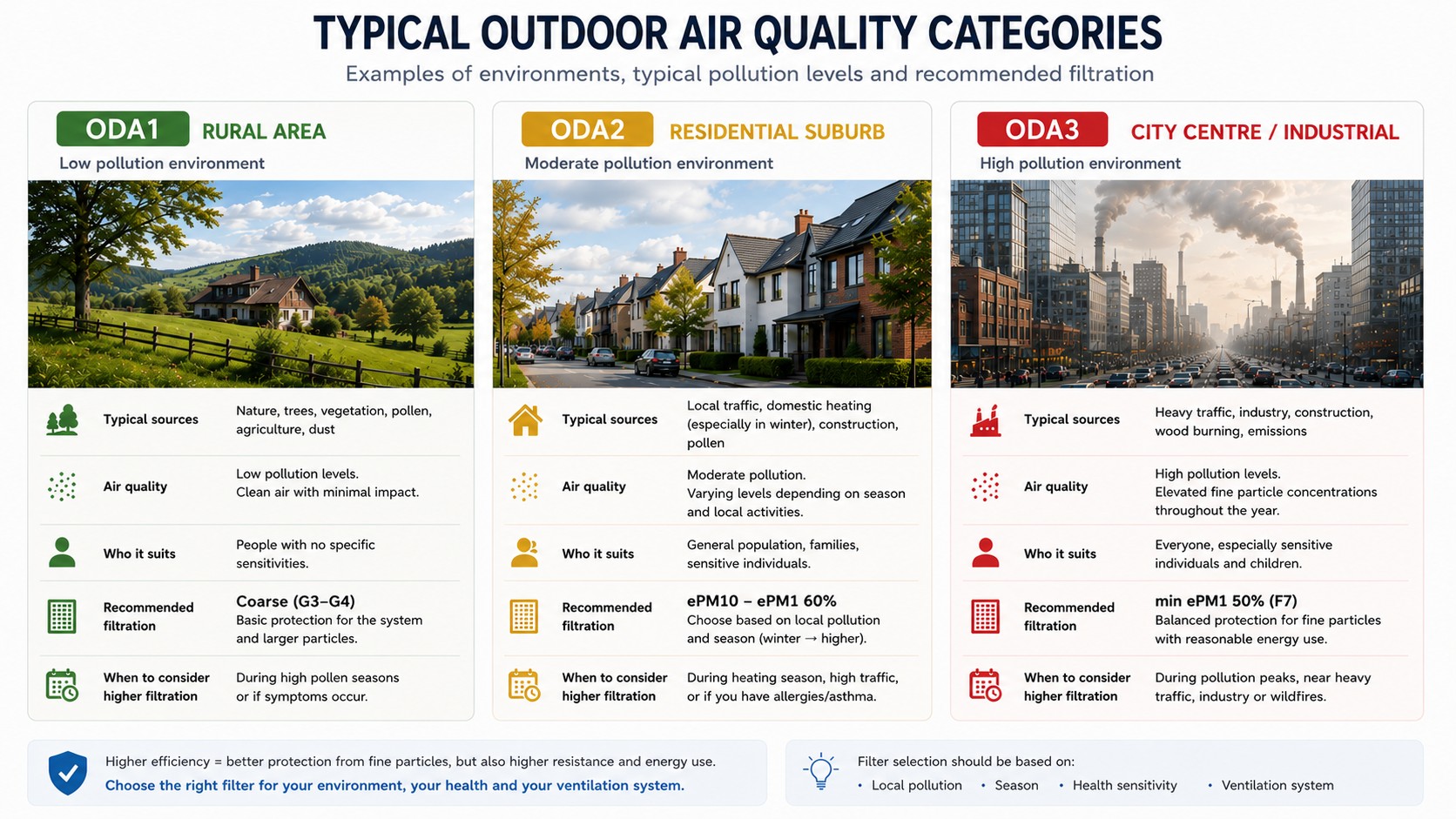
The correct filter depends heavily on the surrounding environment. A rural house, a suburban home and an apartment near heavy traffic do not have the same filtration needs.
Local pollution can also change during the year. In many areas, winter heating season creates more smoke, odours and fine particles. During spring and summer, pollen may become the main problem.

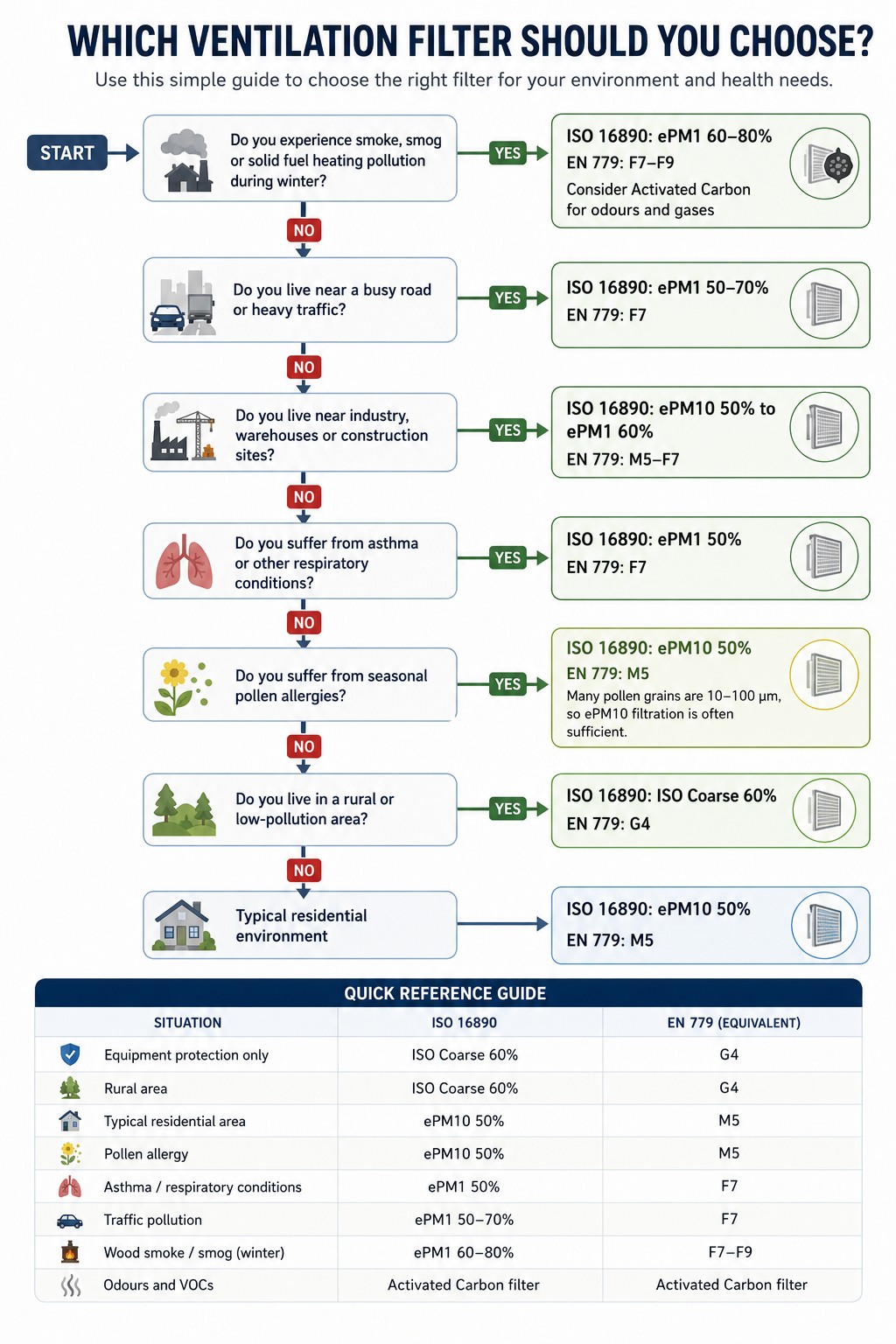
Recommended Ventilation Filters by Situation
| Situation | ISO 16890 | EN 779 equivalent |
|---|
| Equipment protection only | ISO Coarse 60% | G4 |
| Rural or low-pollution area | ISO Coarse 60% | G4 |
| Typical residential area | ePM10 50% | M5 |
| Pollen allergy | ePM10 50% | M5 |
| Asthma or respiratory sensitivity | ePM1 50% | F7 |
| Traffic pollution | ePM1 50–70% | F7 |
| Wood smoke or winter smog | ePM1 60–80% | F7–F9 |
| Odours and VOCs | Combi filter with activated carbon | Activated carbon |

Particle Filter or Combi Activated Carbon Filter?
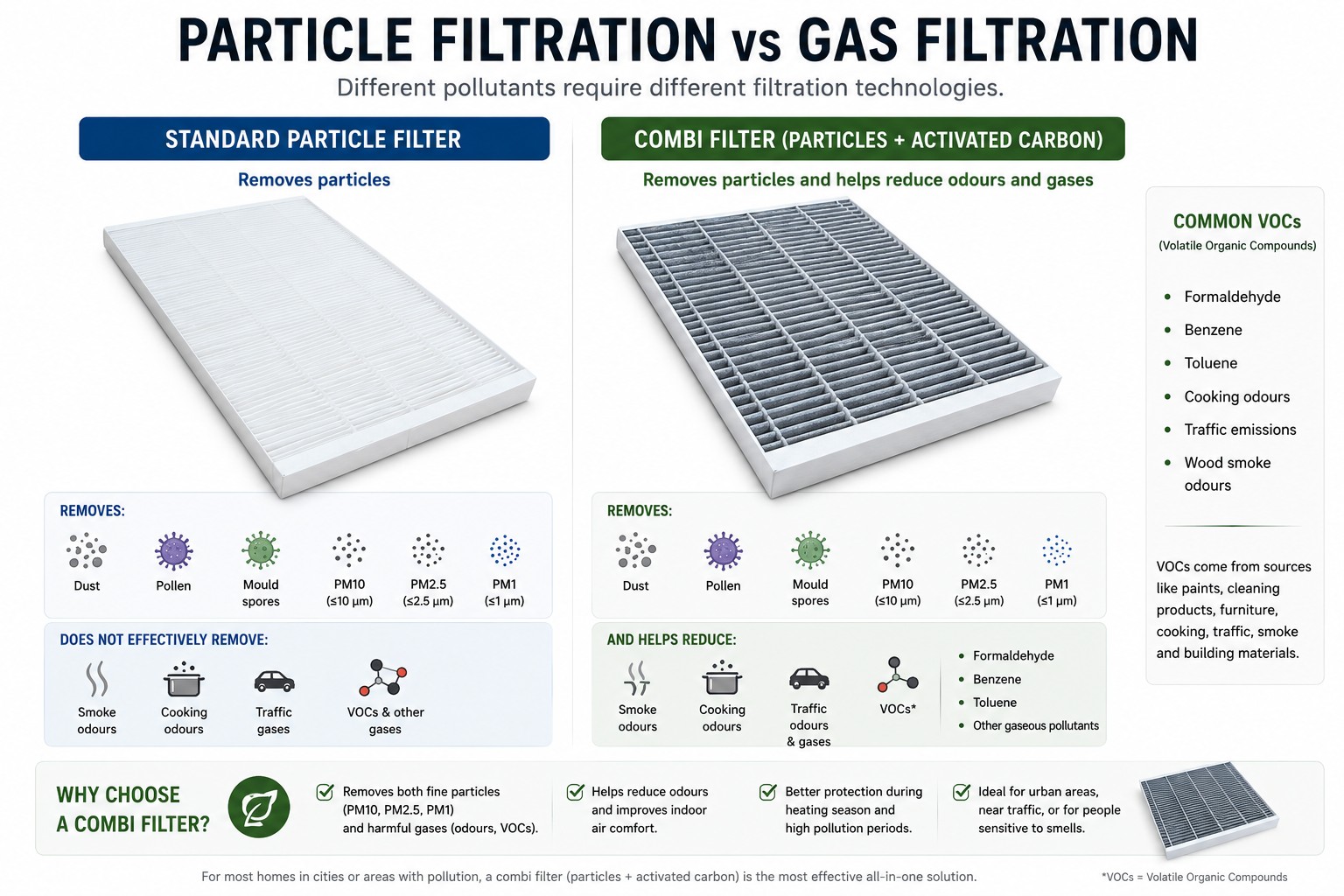
A standard particle filter is designed to capture solid airborne particles such as dust, pollen, mould spores and fine particulate matter.
A combi filter combines particle filtration with activated carbon. This means it can capture particles and also help reduce odours and many common gaseous pollutants.
Common VOCs and gaseous pollutants may include formaldehyde, benzene, toluene, traffic emissions, cooking odours and smoke odours. Activated carbon performance depends on carbon quantity, contact time and the specific pollutant, so it is more accurate to say that carbon filters help reduce VOCs and odours rather than remove every gas completely.
My Practical Experience
In real use, filter selection is not only about technical standards. It is also about the place where the ventilation system operates and the people living inside the building.
For example, during high pollen season, an ePM10 / M5 filter may already provide noticeable improvement for many allergy sufferers. In urban areas, near traffic or during winter smog periods, ePM1 / F7 filtration is usually a better choice.
When smoke or odours become a problem, a combi filter with activated carbon can make a clear difference in comfort, especially during heating season or in areas affected by traffic pollution.
Energy Efficiency Also Matters
Higher filtration efficiency usually means higher air resistance. This increases the pressure drop across the filter and may increase fan energy consumption.
The goal is not always to choose the strongest possible filter. The goal is to choose the correct filter for your environment, your health needs and your ventilation system.
Final Advice
If you live in a clean rural area and have no specific sensitivity, a Coarse or ePM10 filter may be sufficient. If you live near traffic, industry or experience winter smog, ePM1 filtration is usually the safer choice. If odours, smoke or VOCs are a concern, choose a combi filter with activated carbon.
FAQ
What is the best filter for a residential ventilation system?
For many homes, ePM10 / M5 filtration is a practical starting point. In urban areas, near traffic or for people with respiratory sensitivity, ePM1 / F7 filtration is usually recommended.
Is F7 the same as ePM1?
F7 is an older EN 779 filter class. In the newer ISO 16890 system, many filters previously known as F7 are commonly described as ePM1 filters, depending on their tested efficiency.
Can ventilation filters remove pollen?
Yes. Pollen particles are relatively large compared with fine combustion particles. In many cases, ePM10 / M5 filtration is sufficient for pollen reduction.
Can filters remove smoke?
Fine particle filters can capture smoke particles, but odours and gases require activated carbon. For smoke problems, a combi filter with particle filtration and activated carbon is usually the better choice.
Do activated carbon filters remove dust?
Activated carbon itself is mainly used for odours and gases. However, combi filters include both particle filtration media and activated carbon, so they can reduce particles and odours at the same time.
How often should ventilation filters be replaced?
Most residential ventilation filters should be checked every 3–6 months and replaced when dirty or according to the ventilation unit manufacturer’s recommendation. Homes near traffic, construction, smoke or pollen may require more frequent replacement.